



Search Engine Basics: A Beginner’s Guide to How Search Engines Work
INTRODUCTION Search engines have become an essential part of our daily lives. Whether you are looking for information, shopping online, finding directions, or researching a topic, search engines help you find relevant results within seconds. Understanding the basics of search engines can help individuals, businesses, and website owners improve their online experience and visibility.
What Is a Search Engine?
A search engine is an online tool that helps users find information on the internet by entering keywords or phrases into a search box. It scans billions of web pages and displays the most relevant results based on the user’s query.
Some of the most popular search engines include Google, Bing, Yahoo, and DuckDuckGo.
How Search Engines Work
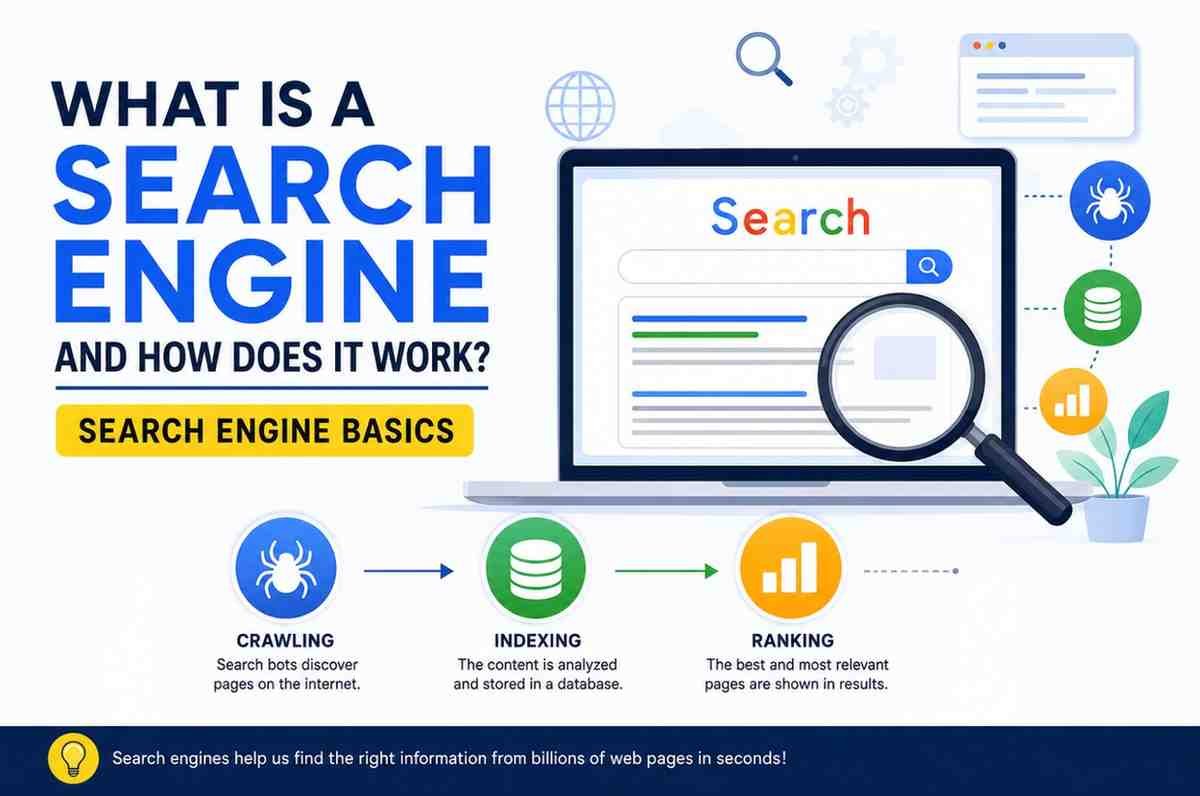
Search engines follow three main processes to deliver accurate search results.
1. Crawling
Crawling is the process of discovering new and updated web pages. Search engines use automated programs called web crawlers or spiders to browse websites by following links from one page to another.
2. Indexing
After crawling a webpage, the search engine stores its content in a massive database called an index. During indexing, the search engine analyzes the page’s content, images, keywords, headings, and other important information to understand what the page is about.
3. Ranking
When a user performs a search, the search engine compares the query with the pages stored in its index. It then ranks the results based on various factors, such as:
- Relevance to the search query
- Quality of the content
- Website authority
- User experience
- Mobile friendliness
- Page loading speed
- Freshness of the content
The highest-ranking pages appear at the top of the search results.
What Are Keywords?
Keywords are the words or phrases users type into a search engine when looking for information. Search engines use these keywords to identify and display the most relevant web pages.
For example:
- “Best smartphones under $500”
- “How to bake a chocolate cake”
- “Digital marketing course”
Choosing the right keywords is essential for improving website visibility.
Organic Search Results vs. Paid Search Results
Search engine results pages (SERPs) generally contain two types of listings.
Organic Results
Organic results appear naturally because the search engine considers them relevant and valuable. Website owners do not pay directly for these rankings.
Paid Results
Paid results are advertisements displayed at the top or bottom of the search results. Businesses pay search engines to display these ads for selected keywords.
What Is SEO?
Search Engine Optimization (SEO) is the practice of improving a website so it ranks higher in organic search results. Effective SEO helps websites attract more visitors without paying for advertisements.
SEO includes activities such as:
- Creating high-quality content
- Using relevant keywords
- Optimizing page titles and headings
- Improving website speed
- Building quality backlinks
- Making websites mobile-friendly
Factors That Influence Search Rankings
Search engines evaluate many factors before ranking a webpage. Some of the most important include:
- High-quality and original content
- Relevant keywords
- Fast website performance
- Mobile responsiveness
- Secure HTTPS connection
- User-friendly navigation
- Quality backlinks from trusted websites
- Positive user experience
Why Search Engines Matter
Search engines provide numerous benefits for both users and businesses.
For Users
- Quick access to information
- Easy product comparisons
- Educational resources
- Entertainment and news
- Local business discovery
For Businesses
- Increased website traffic
- Greater online visibility
- Better brand awareness
- More potential customers
- Higher sales opportunities
Common Search Engine Terms
Here are a few important terms every beginner should know:
- Crawler (Spider): A program that discovers web pages.
- Index: A database of web pages collected by the search engine.
- SERP (Search Engine Results Page): The page displaying search results.
- Keyword: A word or phrase entered into a search engine.
- Backlink: A link from another website pointing to your website.
- Algorithm: The set of rules a search engine uses to rank web pages.
Tips for Better Search Results
You can improve your search experience by following these simple tips:
- Use specific keywords instead of broad terms.
- Place phrases inside quotation marks for exact matches.
- Use filters such as date or location when available.
- Check multiple sources for accurate information.
- Use advanced search operators for more precise results.
The Future of Search Engines
Search engines continue to evolve with advancements in artificial intelligence, machine learning, and voice search. Modern search engines aim to understand user intent rather than simply matching keywords. Features such as voice assistants, visual search, and AI-generated summaries are making search faster and more personalized.
Also Read:YouTube Converter: Everything You Need to Know
Conclusion
Search engines are powerful tools that make finding information on the internet quick and efficient. They work through crawling, indexing, and ranking to deliver the most relevant results. Understanding search engine basics and the fundamentals of SEO can help users search more effectively and enable website owners to improve their online presence. As technology continues to advance, search engines will become even smarter, offering more accurate and personalized search experiences.